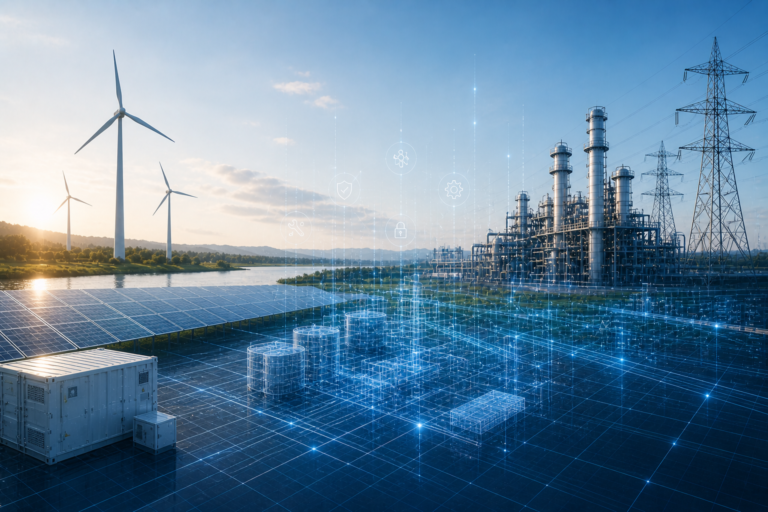



How are AI and automation making energy systems more resilient? The ‘Digital Energy Systems’ subtrack at the BadenEnergy summit explores how digital intelligence becomes an operational advantage, helping infrastructures respond faster, act smarter, and stay resilient under real-world pressure.
The ‘Digital Energy Systems’ subtrack zooms in on a question that feels more relevant than ever: how do we actually make our energy systems more resilient in a world full of uncertainty? It’s not just about having more data or smarter tools, but about using them in ways that truly make a difference when it matters.
At its core, the track looks at how AI and automation can move from theory into day-to-day operations. Energy systems are under pressure – from volatile markets to unexpected outages – and the ability to react quickly and reliably is becoming a key success factor. Digital technologies are no longer a “nice-to-have”; they are becoming essential.
What’s interesting is that this isn’t framed as a pure tech discussion. It’s about impact. How can systems respond faster to disruptions? How can bottlenecks or load peaks be identified before they become real problems? And how do we make sure these solutions actually work in the messy reality of existing infrastructure?
Getting down to what actually works
A big part of that comes down to data – but not just more of it. One of the key challenges is figuring out which data really matters. Not everything that can be measured adds value, and focusing on the right signals is what ultimately drives better decisions and more stable systems.
Of course, bringing AI into critical infrastructure raises its own set of questions. Trust, security, and reliability are not optional here. If automation is going to play a bigger role in controlling energy systems, it has to meet high standards – not only technically, but also in terms of governance and compliance.
Another piece of the puzzle is integration. Energy systems don’t operate in isolation, and neither should digital solutions. Interoperability, shared standards, and cross-sector coordination are key if these technologies are going to scale and deliver real resilience.
In the end, the message of the ‘Digital Energy Systems’ subtrack is quite straightforward: resilience doesn’t come from data alone, but from what you do with it. When data leads to faster, smarter decisions, that’s when it becomes a real operational advantage. And that’s exactly where this conversation is headed.
Key question:
How can data, AI and automation be used as concrete tools to create more resilient, efficient and responsive energy systems?