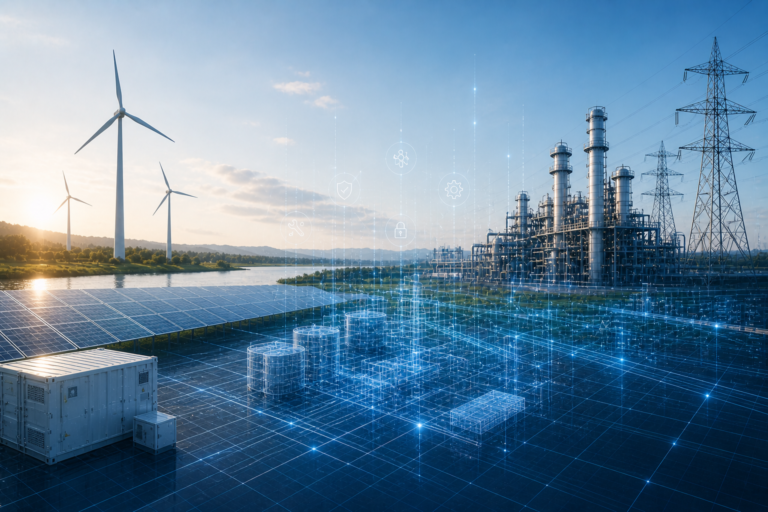



The industrial energy transition is no longer about ambition alone, but about delivery. At the summit, the ‘Industrial Energy Transition’ subtrack explores how companies can decarbonise in ways that are technologically feasible, economically viable, and secure in supply, highlighting practical solutions that can scale today.
The summit places a sharp focus on one of the most pressing challenges of our time: how to deliver a resilient energy future through industrial decarbonisation. Within this context, the ‘Industrial Energy Transition’ subtrack explores how industry can balance climate ambitions with the realities of supply security and global competitiveness. It asks not only what is possible, but what is practical.
At the heart of the discussion lies a guiding question: how can the energy transition succeed with solutions that simultaneously enable decarbonisation, ensure reliable supply, and maintain economic viability? This isn’t a theoretical exercise. For industrial players, the stakes are immediate, with decisions today shaping operational resilience for decades to come.
Turning climate goals into industrial action
Industrial decarbonisation will only move beyond aspiration if it proves technologically feasible, economically sound, and dependable in terms of energy supply.
A key theme is the identification of technology pathways that are already investable and capable of scaling. Businesses are not looking for distant innovations alone; they need solutions that can be deployed now without introducing new risks related to cost, availability, or location. This includes evaluating the roles of electrification, hydrogen, Power-to-X technologies, and low-carbon fuels within a future industrial energy mix.
Strengthening infrastructure and energy security
Equally important is the question of infrastructure. Rather than starting from scratch, many discussions centre on how existing systems can be adapted and upgraded to accelerate progress towards climate neutrality. This pragmatic approach can reduce both costs and transition timelines while supporting a more resilient energy system.
The subtrack also confronts the challenge of ensuring stable energy supply in a world of increasingly volatile renewable generation. Securing reliable capacity, overcoming investment barriers, and creating the right regulatory and market frameworks are all critical to enabling companies to commit to long-term decarbonisation strategies.
Ultimately, transformation will not be driven by single solutions, but by robust technology mixes. Aligning climate goals with supply security is essential, and only economically viable pathways will achieve industrial scale.
Key Question:
How can we achieve the energy transition using solutions that simultaneously enable decarbonisation, security of supply and competitiveness?